Stanislav Grof
How to Change Your MindStanislav Grof was a psychoanalyst whose work helped make psychedelic experience part of both clinical research and a therapeutic tradition that survived the collapse of legal research in the United States. He treated LSD not simply as a source of unusual perceptions but as a means of intensifying psychological processes: in therapy, patients could encounter buried emotion and traumatic memory, sometimes in the form of an apparent return to the circumstances of birth. Later, when psychedelic therapy had been driven underground, Grof’s research, teaching, and development of holotropic breathwork helped carry that knowledge forward.
Psychoanalysis and the LSD session
Trained as a psychoanalyst, Grof approached LSD through a therapeutic framework concerned with unconscious material and the relationship between patient and therapist. Under moderate doses, he found, patients could establish a strong transference with the therapist quickly. They might recover childhood traumas, give voice to emotions that had been buried, or, in some cases, seem to relive their own birth. The drug’s importance in this account lay partly in how it changed the pace and intensity of work already recognizable to psychoanalysis: material ordinarily difficult to reach could emerge within a session, while the therapeutic relationship itself became unusually charged.
Grof gave particular importance to birth experience. Following Otto Rank, he regarded birth as an early trauma and a potential determinant of personality. He did not rest this idea solely on patients’ accounts during LSD sessions. He undertook extensive research to compare their recollections of birth with contemporaneous reports from medical personnel and parents. From this work he concluded that, with LSD’s assistance, many people could recall circumstances of their birth, especially when the birth had been difficult. That conclusion belongs to Grof’s research and interpretation; the account presents it as his finding, not as an established fact about memory.
The method placed Grof within a broader debate over what psychedelic therapy actually revealed. Sidney Cohen observed that patients’ insights could reflect the theoretical expectations of their therapists: patients working with Freudian clinicians produced Freudian interpretations, while those with Jungian clinicians reported archetypal material. Grof’s own description of psychedelics as nonspecific amplifiers of mental processes captured a related possibility. The drug could intensify experience without, by itself, settling how that experience should be explained. This left therapeutic value and scientific certainty as distinct questions.
Research amid retreat
By the mid-1960s, psychedelic research faced growing professional and public opposition. Reports of acute crises and psychotic episodes, alongside sensational coverage and disputed claims about LSD, helped recast the drug from a possible treatment as a public danger. Researchers disagreed over the balance of therapeutic promise and risk; Cohen, for example, continued to defend supervised therapeutic use while warning of serious complications outside responsible clinical settings. The atmosphere narrowed the space in which Grof and others could conduct research.
In April 1966, Sandoz withdrew LSD-25 from circulation, and many of the seventy research programs then under way began to close. In October, the Food and Drug Administration ordered researchers across the United States to stop their work. Grof was among the researchers whose program continued at the Maryland Psychiatric Research Center at Spring Grove, one of the few sites to survive the purge. There, he worked with Bill Richards, Richard Yensen, and Walter Pahnke. Their research explored LSD and psilocybin as possible treatments for alcoholism, schizophrenia, and the existential distress of people with cancer. The center continued until 1976, even as nearly all comparable American programs had ended.
Spring Grove’s unusual survival had no clear single explanation. Former staff members rejected speculation that access for powerful people in Washington had kept the program alive. They emphasized instead that the center’s director, Albert Kurland, had a strong reputation among federal officials and substantial connections in Washington, which he used to keep the institution operating and to obtain LSD. Grof’s continued work there therefore marked not an uninterrupted national research effort, but a rare institutional exception during a period of retreat.
Breathwork and the underground lineage
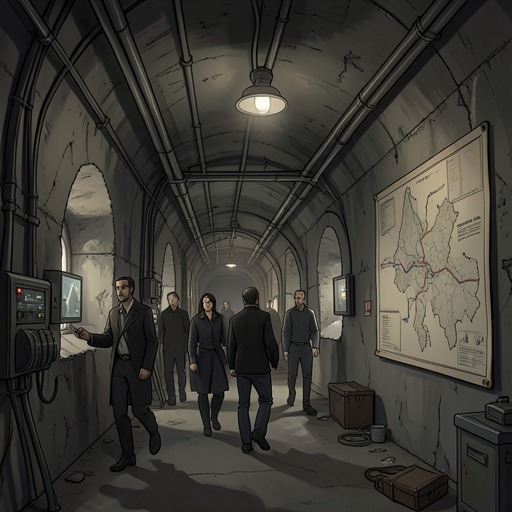
When psychedelic drugs became illegal, Grof developed holotropic breathwork, a non-pharmacological practice that could continue exploring altered states without administering those drugs. The change in method did not mean that the earlier therapeutic knowledge vanished. According to Fritz, a guide interviewed in the account, Grof taught breathwork publicly while also discreetly sharing his knowledge of psychedelic therapy with a select group of trainees. Fritz and his future wife, a clinical psychologist, were among those who went on to become underground guides; they later worked separately with male and female clients.
Grof’s influence also reached underground practitioners through a wider professional lineage. Guides interviewed by the author traced their training, directly or indirectly, to Grof, Timothy Leary, Al Hubbard, or Leo Zeff, often through students and colleagues. That descent connected the legally authorized research of the 1950s and 1960s to private practice after the official programs had closed. It was not a simple continuation of the old clinics: the work had become illegal and required secrecy, and guides had to confront the possibility that an intense experience could destabilize a vulnerable client. But Grof’s teaching gave the underground a route for transmitting methods beyond the institutions that had first examined them.
A new setting for his work
The California Institute of Integral Studies in San Francisco provided another setting for Grof’s work. The institute focused on transpersonal psychology, a spiritually oriented approach drawing on Carl Jung, Abraham Maslow, and traditions from both Eastern and Western cultures. Grof had been on its faculty for many years. In 2016, the institute began offering the nation’s first certificate program in psychedelic therapy, a development that placed formal training in a field once pushed into secrecy inside an established educational institution.
The personal account of Fritz’s meeting with Grof at Esalen Institute in 1982 shows how that transmission could take shape. Soon after his father’s death, Fritz met Grof during a breathwork course and experienced an episode he regarded as comparable in power to a psychedelic experience, including an apparent reliving of his birth. He subsequently added holotropic breathwork to his bodywork practice and undertook years of intensive training with Grof in Northern California and British Columbia. The episode is Fritz’s account, not evidence that every participant underwent the same experience; its significance here is the way Grof’s practice could lead from a workshop into extended training and, in turn, underground guiding.
Grof’s career thus crossed a divide between clinical permission and prohibition without leaving psychedelic therapy behind. His work began inside psychoanalysis and supervised research, continued at the exceptional Spring Grove center after the national shutdown, and then passed through breathwork, professional mentorship, and underground practice. His central contribution in this history is both clinical and connective: he investigated what LSD sessions could bring into therapy, and he helped preserve a body of therapeutic knowledge when the institutions that had supported the research largely disappeared.